Most database migration projects are scoped around a straightforward question: how do we move the information from the old system to the new one? That question has a straightforward answer. Moving records from one database to another is a solved problem, and vendors have done it thousands of times across every industry.
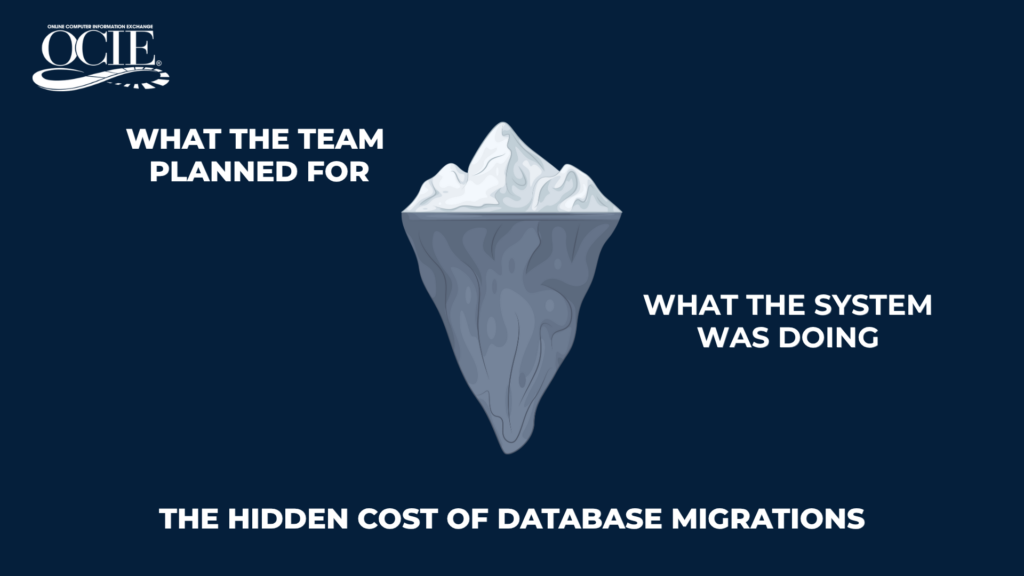
The question that rarely makes it into the project plan is harder: how do we recreate what the system does with that information? That is where database migrations go over budget, and it happens so consistently that the pattern is worth understanding before a project begins rather than after it stalls.
The Logic Embedded in Legacy Systems
Every legacy system carries more than records. It carries the rules, calculations, and programming logic that transforms records into meaningful information. For example, an accounting system stores journal entries, invoice and payment histories, applies business logic to determine how transactions are classified, and formats financial statements that comply with GAAP or IFRS; some of which was built into the system or customized years ago by people who no longer work at the organization.
That embedded logic is not stored in a database table and is rarely documented in any schema. It lives in code, in configuration files, in customized report templates, and in the working knowledge of the few people who have maintained the system long enough to understand how it behaves. When a legacy system decommissioning project reaches that layer, the migration work stops while the team figures out what the system was doing in the first place.
This is what practitioners call the business logic problem, and it is the most common reason database migrations run over time and over budget.
What Business Logic Means in Practice
The concept is easier to grasp with a concrete example. A company decides to migrate off an aging accounting platform. The database contains decades of account-level records. The migration team extracts the records, maps the fields to the new system’s schema, and runs validation checks.
The numbers do not match the original outputs, and the discrepancy is not caused by missing or corrupted records. The old system applied a specific rounding rule to a specific calculation that no one documented and no one thought to replicate. The output differs because the logic differs, and the only way to determine why is to reverse-engineer work that was done by a contractor who left eight years ago. That investigation takes weeks. In some cases, it takes months.
The business logic problem surfaces in several distinct ways across most migration projects.
Report formatting and calculation rules
Older mainframe-era platforms in particular generate outputs with formatting conventions, rounding behavior, and field definitions that are not captured anywhere in the underlying database. Replicating those outputs in a new system requires reconstructing the logic from the results backward, which is slow, expensive, and rarely produces a complete match on the first attempt.
Regulatory mandates and requirements
For organizations in mortgage servicing, healthcare, or government contracting, reporting formats are tied to regulatory mandates and requirements that were implemented years before the migration conversation started. The new system has to produce outputs that satisfy those same requirements, which means the migration team must find and document every rule the old system applied before they can replicate it in the new environment.
Audit trail integrity
Regulators and examiners do not request raw database exports. They ask for the record as it existed at a specific point in time: what did this statement show on this date, what did this report reflect at month-end, what figures appeared in the quarter-end financial package. Preserving that requires more than moving the underlying numbers. It requires preserving the logic that generated the output in the form an examiner recognizes and accepts.
Customized integrations and workarounds
Most legacy systems that have operated for more than a decade carry integrations, workarounds, and customizations that were added after the original implementation to solve specific operational problems. These are rarely documented, and a migration that does not account for them will break workflows that teams have depended on for years without anyone realizing those workflows were tied to legacy behavior.
Why the Scope Misses It Every Time
Database migration budgets are built around what project teams can see and count: the volume of records, the complexity of the schema, the cost of migration tools, and the implementation timeline. Business logic is invisible in that scoping exercise, which means it arrives as a surprise rather than a line item.
The people closest to the legacy system often cannot describe what it does in technical terms, because they have spent years reading its outputs without examining how those outputs are generated. The people designing the migration plan are working from documentation that is years out of date or was never complete to begin with.
A 2023 Foundry/Insight Enterprises report found that 86% of IT executives identified technical debt as a constraint on their organization’s ability to innovate. Business logic embedded in aging systems is a primary driver of that debt, and it is the piece that is hardest to quantify before the work begins.
The pattern is predictable once you have seen it enough times. A migration scoped for six months runs for eighteen. A budget built around moving records ends up covering months of logic reconstruction, custom development, and validation cycles that nobody planned for. The original deadline passes, the project remains open, and the legacy system keeps running and accruing costs because no one can sign off on decommissioning it until the outputs can be verified.
A Different Path for Regulated Organizations
For many organizations in regulated industries, full database migration is the wrong approach for the problem they are trying to solve. The underlying goal is to preserve access to the information the system produced, in a form that satisfies compliance requirements and supports audit response, without requiring the organization to maintain aging infrastructure indefinitely.
Information-level archiving addresses that goal without requiring anyone to solve the business logic problem at all. Instead of extracting raw records and attempting to reconstruct the rules that give them meaning, information-level archiving captures the outputs the system already generated: the reports, statements, and documents in the finished form they exist in, with all formatting, calculations, and regulatory requirements already applied.
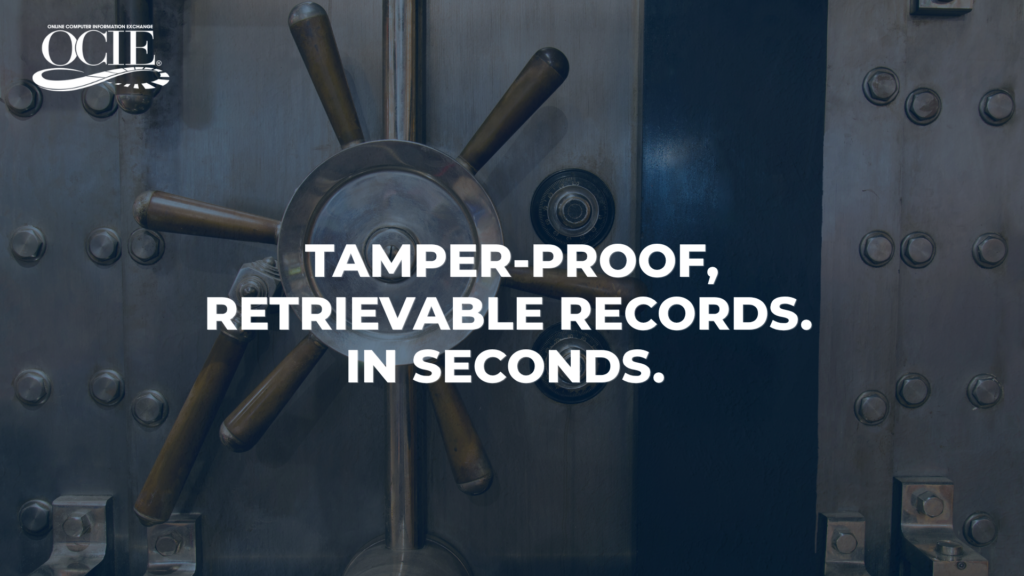
The outputs are correct because the system already made them correct. Archiving them preserves that accuracy permanently. For a compliance officer responding to an agency examination or audit, the distinction is significant. The examiner is asking for the record as it existed, and an information archive delivers that record tamper-proof, permanent, and retrievable in seconds, rather than a reconstructed approximation that requires its own round of validation before anyone can rely on it.
Questions Worth Raising Before the Project Starts
If your organization is planning a database migration off a legacy system, the business logic question belongs near the beginning of the scoping conversation, not at the point where the project has already run past its deadline.
- What does this system produce? Not what records it stores, but what outputs it generates: reports, statements, formatted documents, regulatory submissions. Those outputs are what the people who use the system depend on, and they are what an examiner will request during an audit.
- Who understands how those outputs are generated? If the answer involves a single contractor on a long-term retainer, that dependency is worth understanding before migration begins. Institutional knowledge gaps surface during projects, and they are more expensive to address mid-stream than at the planning stage.
- What are the applicable retention requirements? Retention rules specify how long records must be kept, in what form, and with what level of accessibility. A system holding records subject to a ten-year retention requirement cannot be decommissioned until that requirement is satisfied, and discovering that constraint after the migration is complete creates a situation where the project is finished but the old system still cannot be shut off.
- Is full migration the right scope, or is access the goal? In many cases, the business case for migration centers on cost reduction and compliance risk reduction. An information archive addresses both without requiring the business logic reconstruction that drives migration projects over budget. The two approaches solve different problems, and clarifying which problem the organization is trying to solve changes the shape of the project significantly.
Working through those questions takes a focused conversation. The answers determine whether a full migration makes sense, whether information archiving is a better fit, or whether some combination of both is the right approach for the specific systems involved.
The Consistent Pattern
Database migrations go over budget for predictable reasons. Project teams scope what is visible and discover what is invisible after the work is underway. Business logic embedded in legacy systems is the most common invisible cost in migration projects, and it compounds the longer a project runs without resolving it.
Organizations that surface these questions before committing to a migration scope are better positioned to make the right decision for their situation and to set realistic expectations when they do move forward. The cost of raising the question early is a conversation. The cost of encountering the answer at month seven is a budget revision, a delayed decommission, and continued carrying costs on a system the organization was ready to retire.
OCIE has worked alongside regulated organizations in healthcare, federal government, and financial services on legacy system transitions for over 30 years. If you are planning a migration and want to think through what your system produces and what approach makes sense before the project begins, let’s get on a call.
OCIE is a managed information service built for regulated industries. We help organizations retire legacy systems, preserve audit-ready records, and eliminate the compliance exposure that comes with keeping aging platforms on life support. Learn more about our approach.